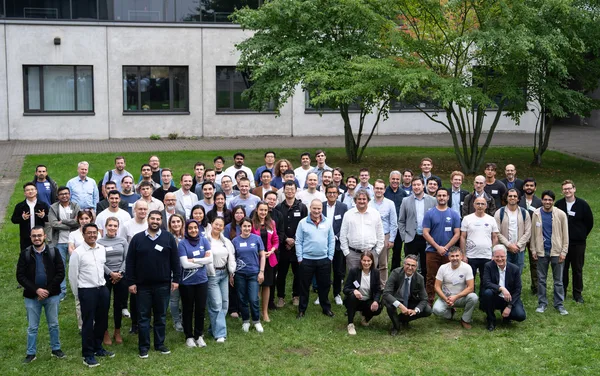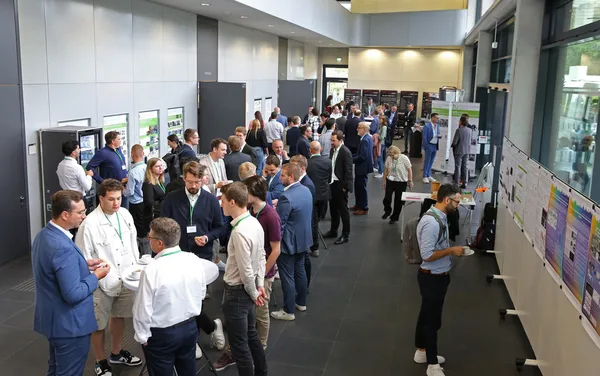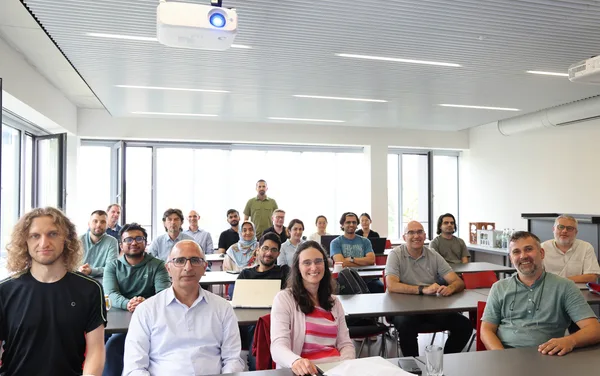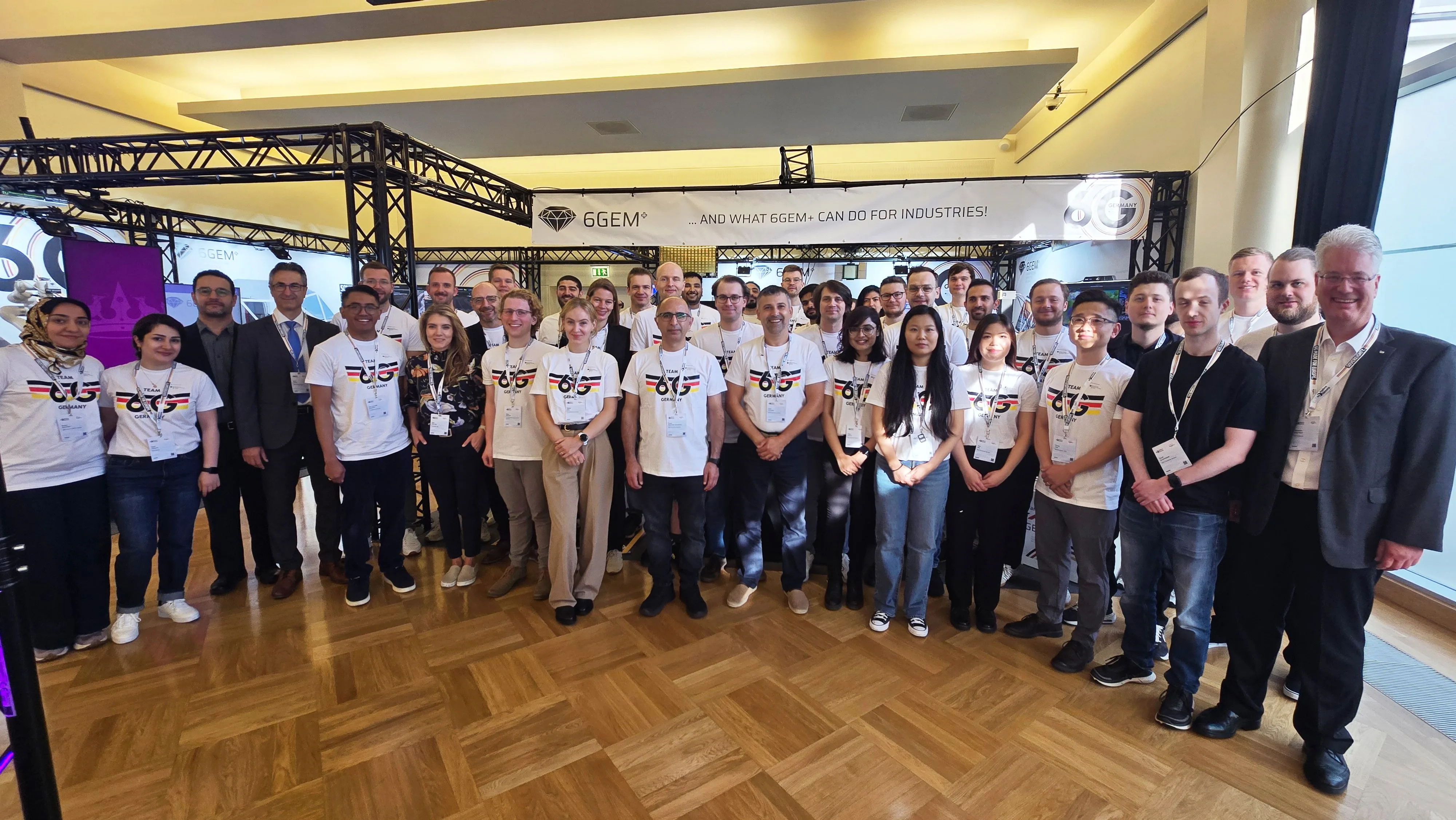
From September 8th to 10th, 2026, the Berlin 6G Conference brought together researchers, industry representatives and policymakers at the bcc Berlin Congress Center. At Booths 26 and 27, the 6GEM+ Transfer Hub presented 14 live demos. A central theme was open 6G systems: open, software-based network components that let research results move quickly into real networks and give industry more flexibility in building future wireless systems.
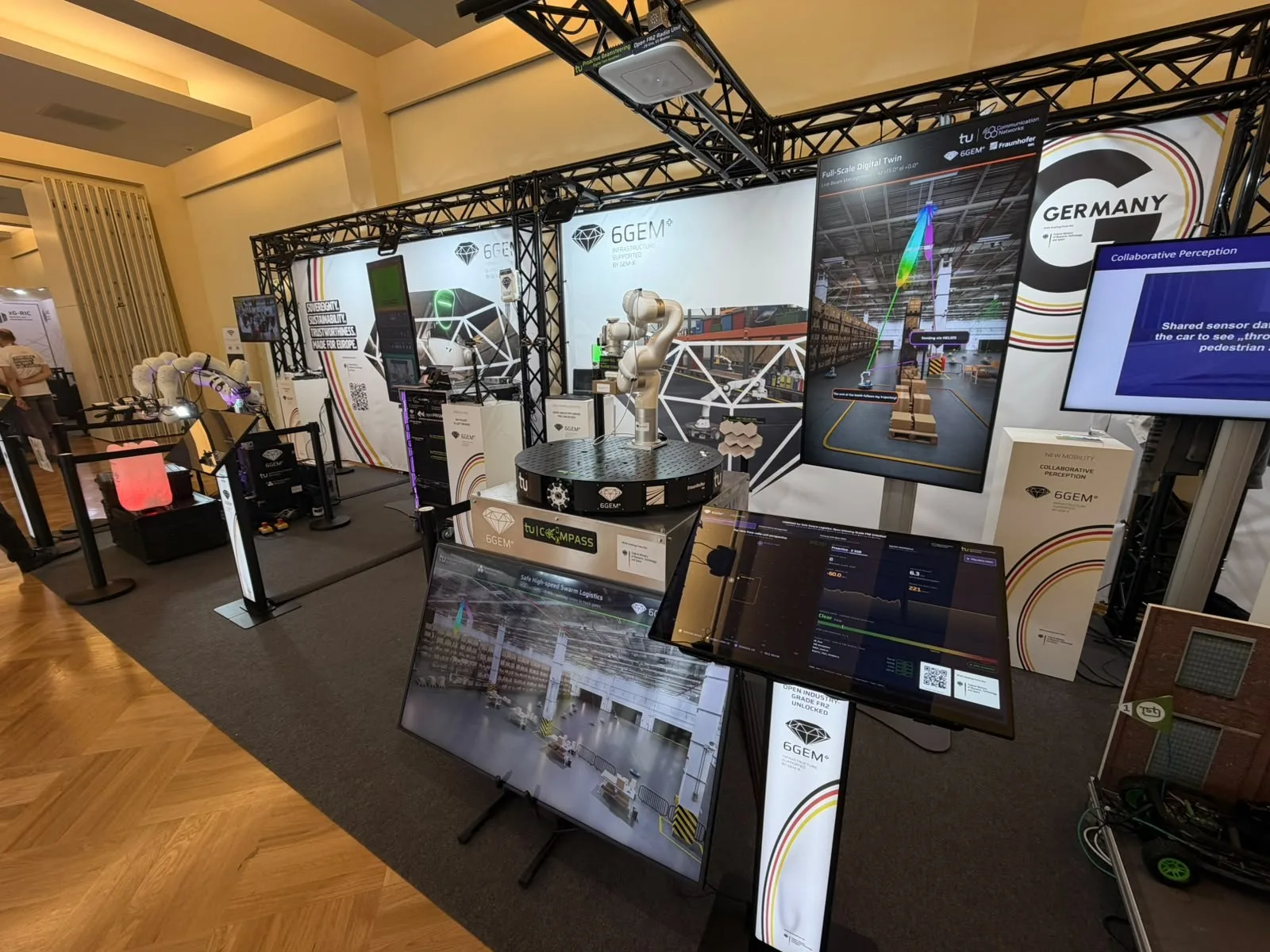
Several live demos showed this approach in practice. For example, “Open 6G RAN: No Packet Is Left Behind” showed how a small software patch from 6G Germany research fixes a bottleneck in radio access networks that had gone unnoticed for about a decade. Because the RAN is open, a fix like this can be integrated and tested directly instead of waiting for proprietary product cycles. Another example, “Safe Swarm Logistics: Open Industry-Grade FR2 Unlocked”, used an open, industry-grade FR2 system to turn the radio signal itself into a safety feature for human-robot collaboration in logistics.
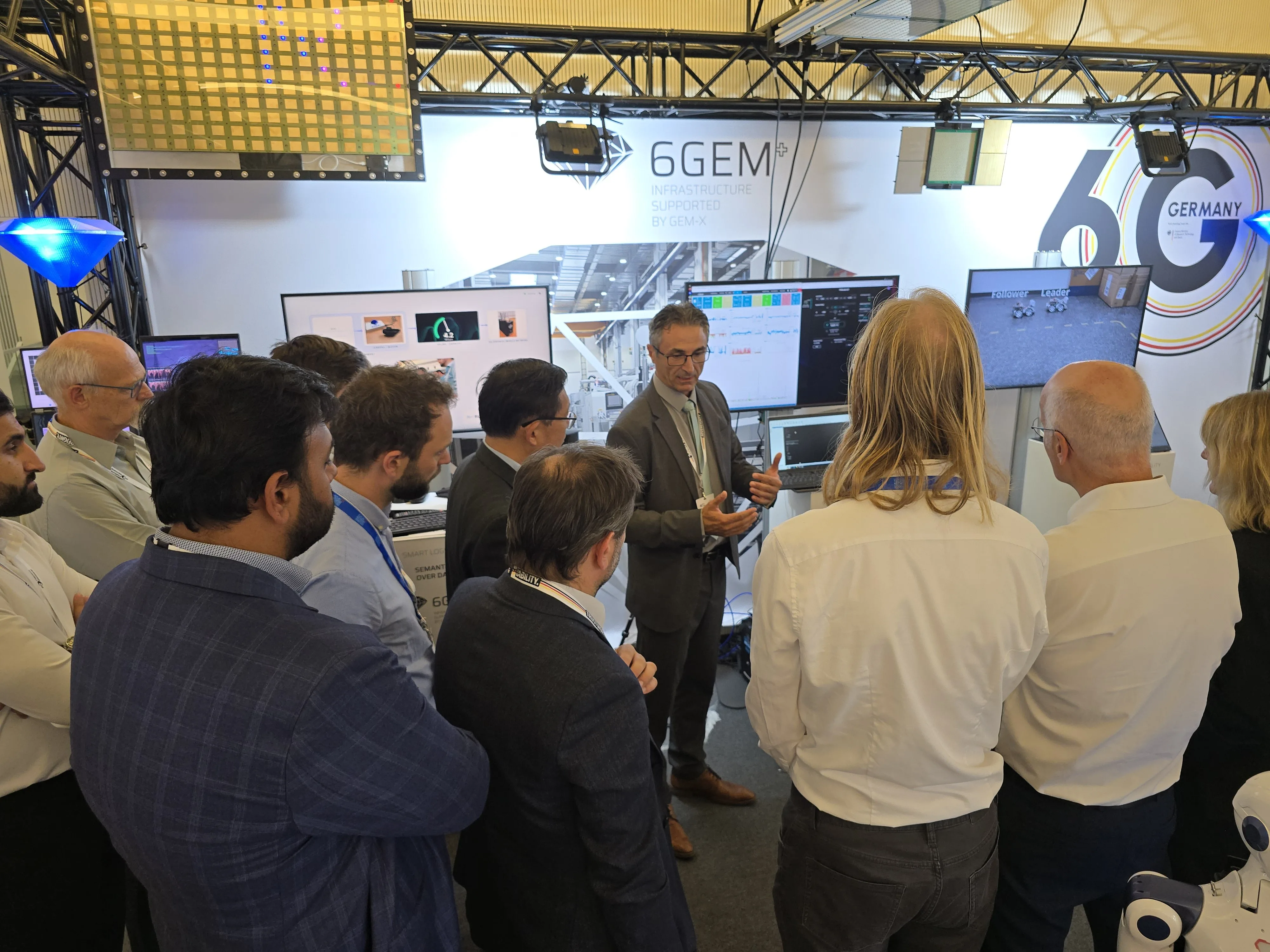
In the industrial domain, further live demos showed how reconfigurable intelligent surfaces (RIS) and an RIS-equipped drone can adapt 6G coverage to a changing factory floor. Another used dynamic RIS beam steering to restore mmWave video links when obstacles block the direct path. In the remote robotics demo, visitors used a headset and haptic gloves to control a robot from a safe distance. An FPGA-based software-defined radio reached about 1.1 Gbps over the air and supported real-time adaptation for FR2 and FR3 communication and sensing. Further stations covered multi-band FR1–FR3 communication with XR-based robot teleoperation, an FR3 phased-array antenna with live beam steering, collaborative perception for road users, on-device AI for 6G mobility, and a live digital traffic twin.
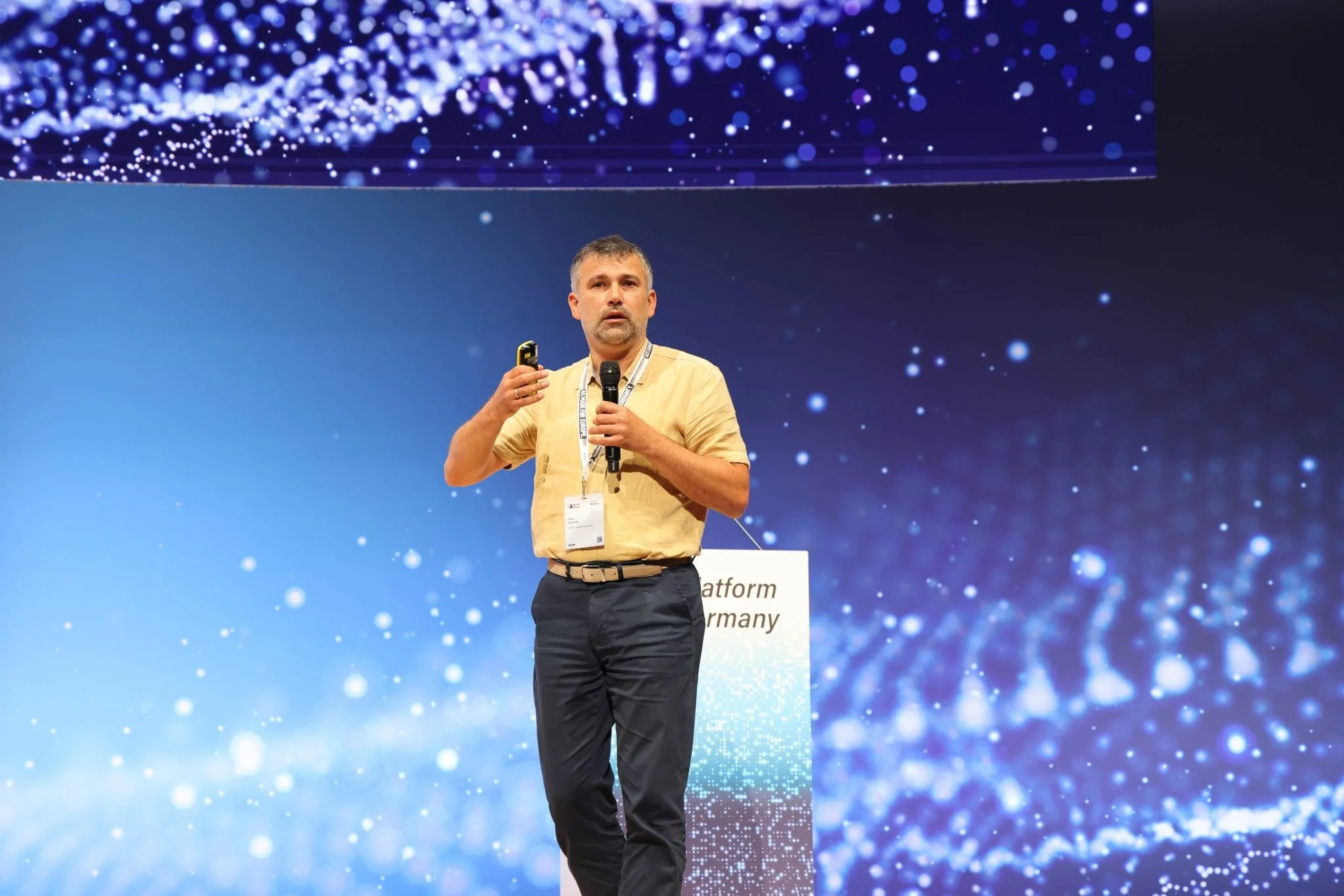
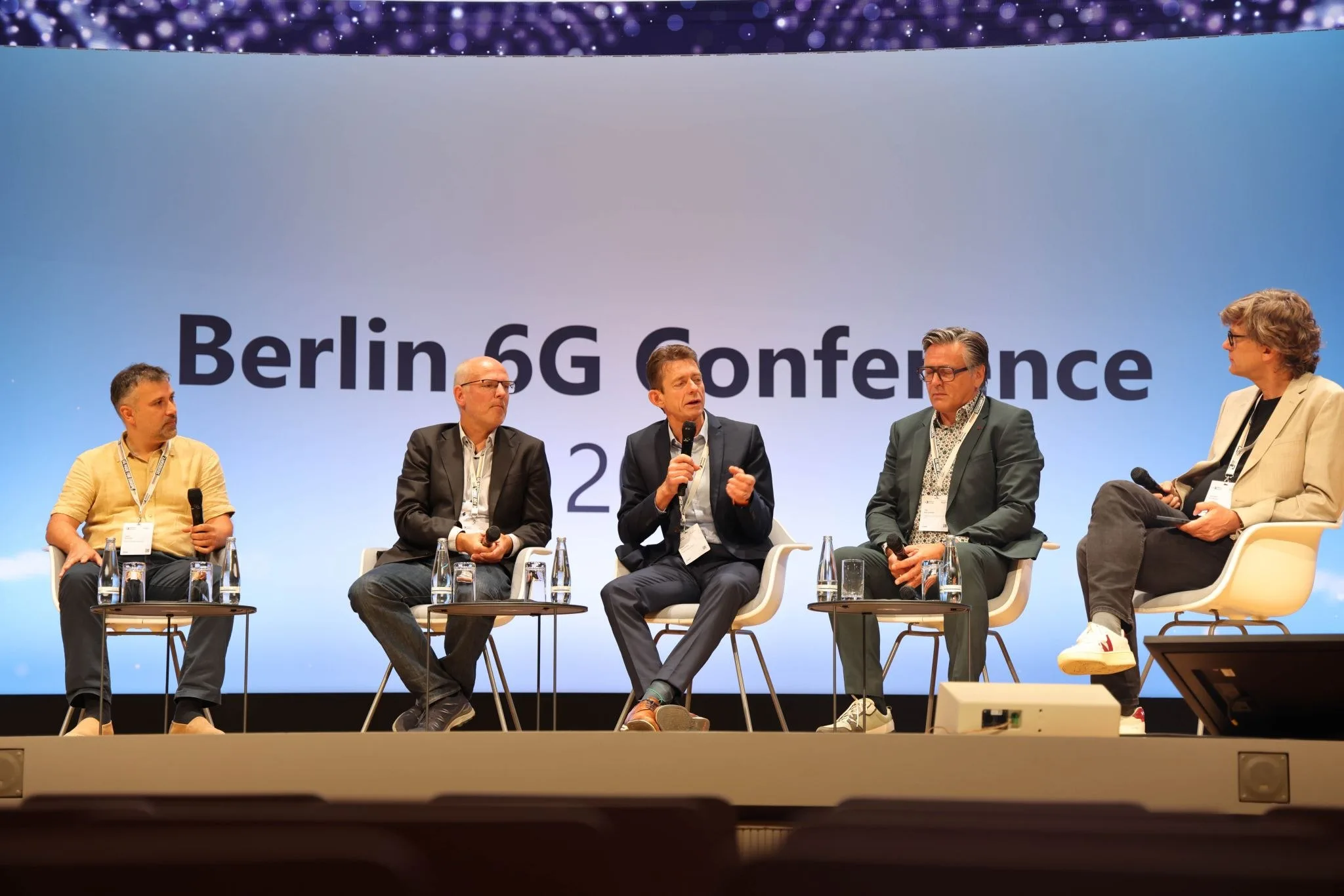
6GEM+ also contributed to the conference programme. Prof. Haris Gačanin chaired the session “Wireless Connectivity and Intelligence for the Artificial-Intelligence-of-Things” and the 8th JAP-GER Beyond 5G/6G Technical Session, where 6GEM+ researchers also presented posters. Dr. Firooz Bashashi Saghezchi chaired the panel “AI-integrated Radio Access Networks” with participants from Siemens, Ericsson, Nokia, TU Munich and Analog Devices. On the final day, Prof. Gačanin presented 6GEM+ in the session on Germany’s 6G Transfer Hubs. He then joined the panel “From 6G Research to Industrial Impact: How Do We Accelerate Technology Transfer?”, moderated by Prof. Slawomir Stanczak (Fraunhofer HHI), with representatives from Telefónica, Bosch Research and Ericsson.
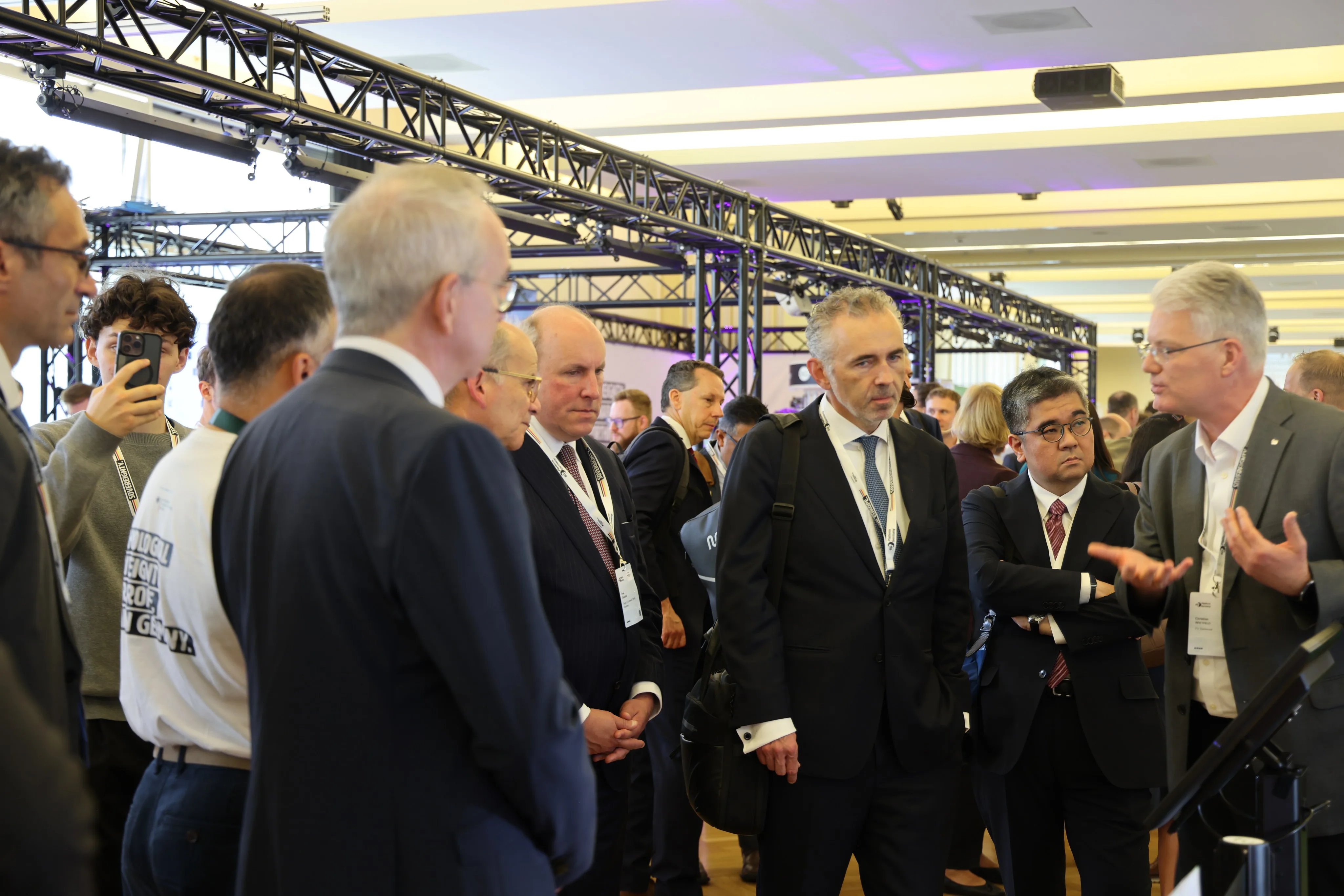
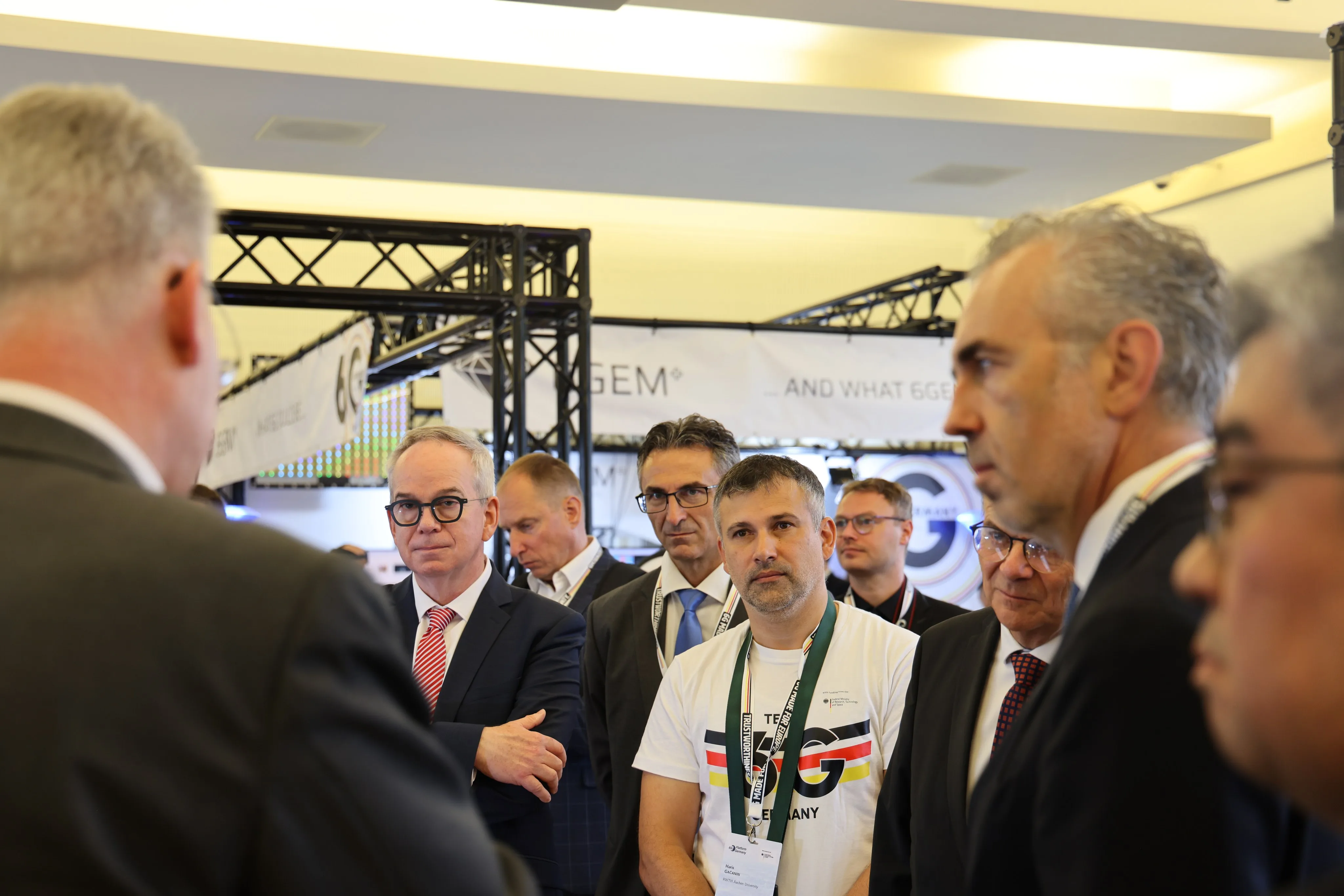
Over the three days, the booths welcomed numerous visitors, including Paul Dabbar and delegations from NICT, Airbus, Siemens, Bosch, TNO and Rohde & Schwarz. The conversations at the booths showed strong interest in open 6G systems and in moving 6G research into industrial practice.
More information about all live demos is available on the 6GEM+ Booth Navigator.