
Recent News
-
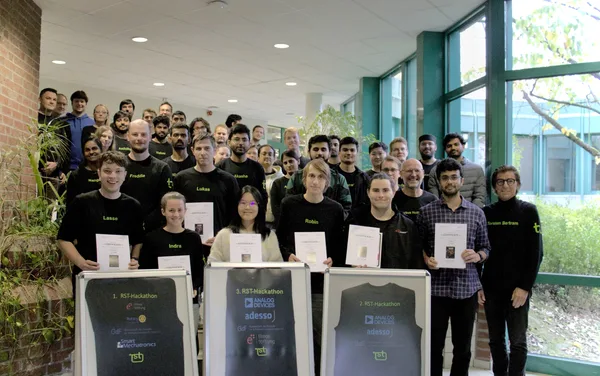
6GEM+/GEM-X Co-Organizes Hackathon for Communication-Aware Robot Control
-
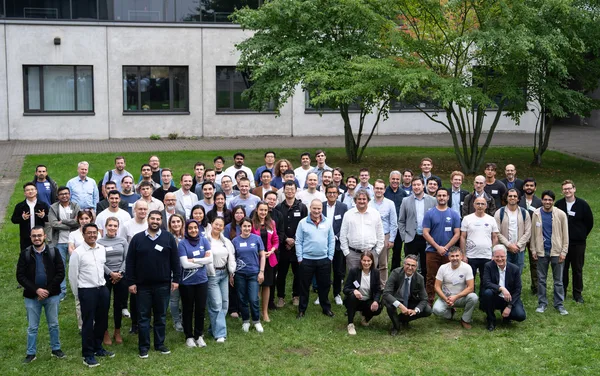
2nd 6GEM+/GEM-X General Assembly Meeting in Bochum
-
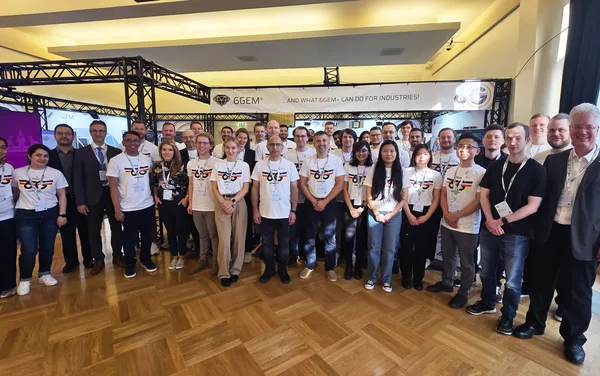
Highlight of the year: Berlin 6G Conference 2026
-
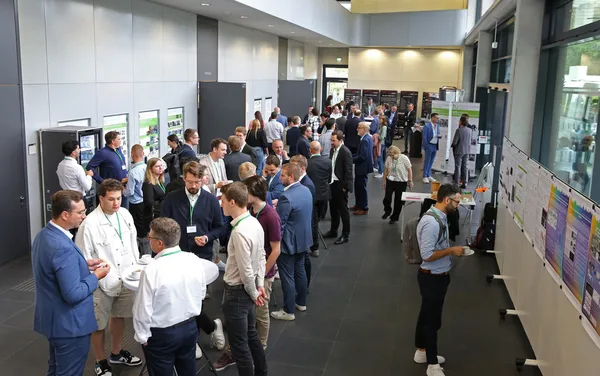
6GEM+ Research on Connected and Automated Mobility Presented at the 21st Dortmunder AutoTag
-
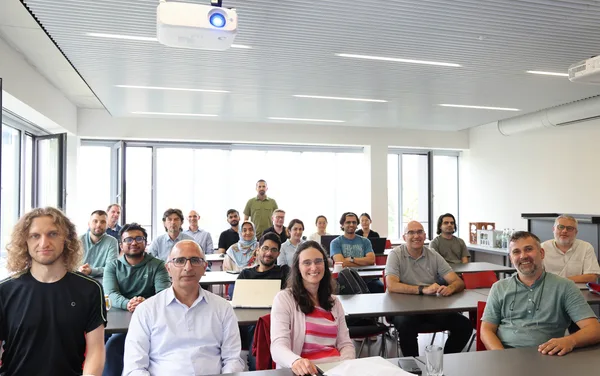
Workshop on Intelligent Wireless Systems for Communications, Computing and Sensing
-
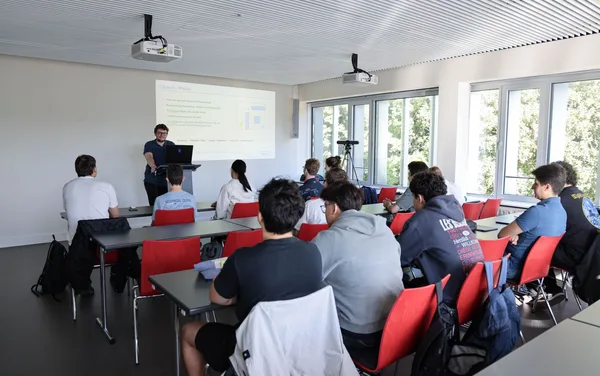
High School Students Explore Future Communication Technologies Through 6GEM+ Demonstrations
-
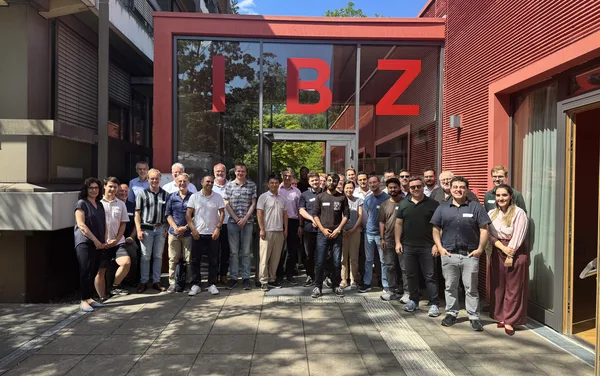
6GEM+ Showed Recent Demonstrators at the Dortmund 6G Security, Privacy, and Resilience Workshop
-
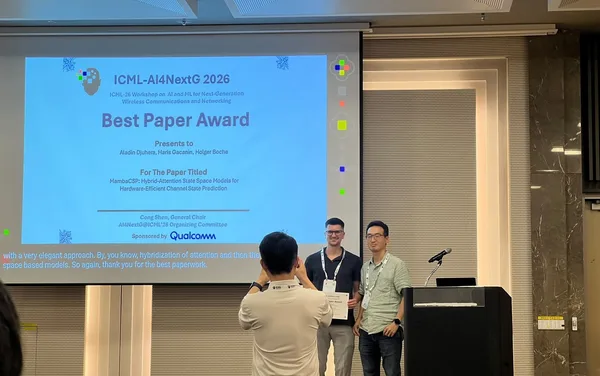
6GEM+ Research Receives Best Paper Award at ICML-AI4NextG 2026
-
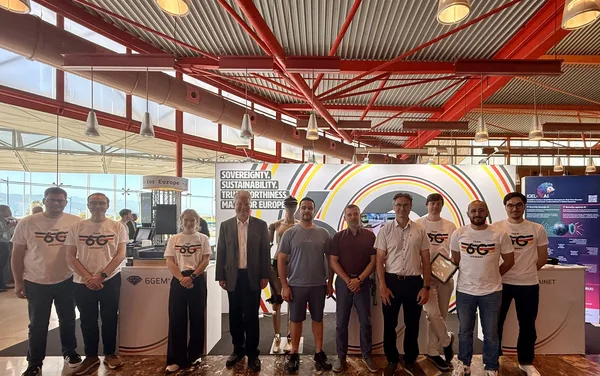
6GEM+ Team Presents Recent Results at EuCNC and Wins Best University Demo Award
-
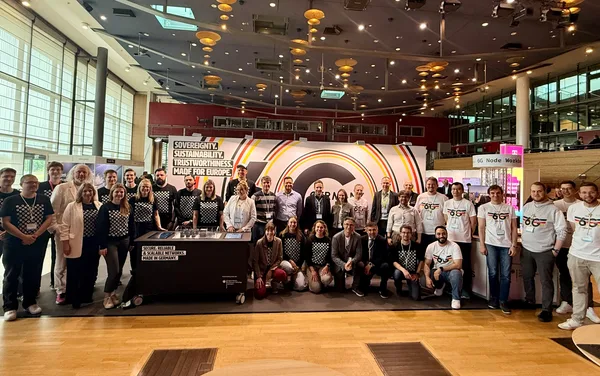
6GEM+ Team Participates in IEEE 6G Summit Dresden 2026
-
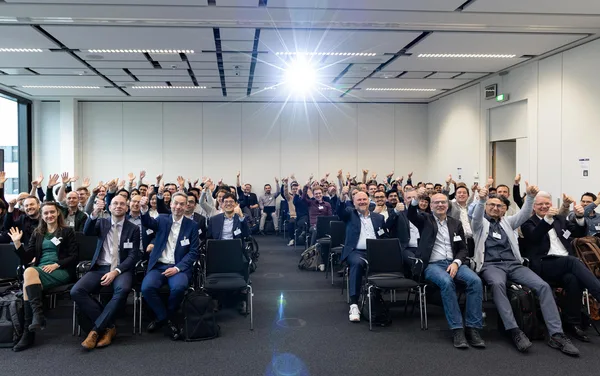
6GEM+ and GEM-X Hold Successful 1st General Assembly in Aachen
-
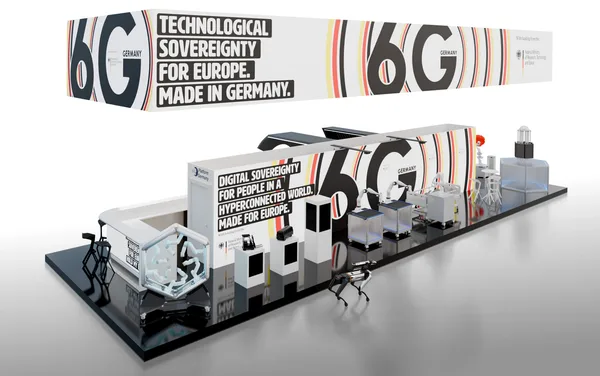
Transferhub 6GEM+ Presents Industrial 6G Innovations at MWC 2026
6GEM+ Profile
The process of increasing digitalization across vertical industries will, in the future, require the integration of robust and energy-efficient mobile communication and computing systems capable of operating in demanding industrial environments. This process will lead to innovative wireless applications such as the “industrial metaverse” for manufacturing, logistics, and more.
The vision of an industrial metaverse, as the foundation for fully immersive and interactive connected digital industries, enables the seamless integration of advanced industrial applications and facilitates real-time interactions between physical and digital environments, thereby paving the way for the next generation of immersive digital-twin technology (ngDT).
Realizing this vision presents significant technological challenges, as the demands placed on mobile networks are continuously increasing in order to support simultaneous deterministic latency, resilience, and fail-safe operation through ultra-high reliability. These requirements call for adaptability and system-level optimization, as well as end-to-end network co-design.
To make this vision a reality, 6GEM+ will further promote disruptive research and technological innovation in testbeds by designing adaptive, resilient, and sustainable 6G mobile networks for key industries.
The strategy for realizing this vision includes the following key components:
- Development of highly innovative, in part disruptive, research solutions for mobile communication and computing systems to overcome current performance limitations of demanding applications, with a continued focus on adaptive, resilient, and energy-efficient capabilities for immersive industrial applications;
- Design of optimal communication systems to meet strict requirements for reliability, latency, and scalability through innovations in network architectures, AI-driven optimization, and edge-cloud integration, thereby exerting a transformative impact on the digital industry;
- Close collaboration with “use-case mentors” from the 6G industry and 6G users to enable early integration of lab-developed system-level concepts and algorithms, including demonstrations of end-to-end applications within the testbeds (manufacturing, logistics, rescue, mobility);
- Acceleration of the transfer of 6G innovations, building on the strong “6G Made in Germany” expertise of 6GEM, within 6GEM+, creating a competitive advantage for local industry through science communication, research transfer, start-ups, and more;
- Sustained strengthening of 6G research by establishing a long-term research and transfer cooperation platform for the wireless industrial metaverse that extends beyond the initial rollout phase of 6G and continues the work of 6GEM+ well beyond 2030.
6GEM+ will thus enable critical applications for vertical industries by providing latency-constrained, computation-, energy-, and cost-efficient, as well as trustworthy, 6G mobile networks.
Scientific Contributions
*Accumulated since 2021, including 6GEM
Our Goals
The exploratory 6GEM+ research will focus on groundbreaking 6G technologies that, after extensive analysis, will be tested in laboratory environments to maintain the flow of technological innovation. In line with the focus on 6G development for vertical industries, 6GEM+ concentrates on fundamental research and innovations that produce application-specific 6G laboratories and 6G proof-of-concepts. At the same time, 6GEM+ supports the digital industrial ecosystem through demonstrations in the testbeds listed below. Therefore, we structure the objectives of 6GEM+ into four key areas:
- First, exploratory research will focus on investigating the fundamental principles of 6G (first objective), including AI-native networking, integrated communication, computing & control, novel architectures for intelligent reconfigurable surfaces, multi-band beamforming, and sensing technologies.
- The second objective is the application-oriented design of 6G technology, in which new 6G concepts are designed and validated through analysis, simulations, and testbed demonstrators (design of AI- and extended-reality (XR)-driven automation and optimization in manufacturing, logistics, mobility, and rescue).
- The third objective focuses on supporting the local ecosystem for technology transfer and innovation. This will be achieved by fostering collaboration between academia, industry, and start-ups for knowledge exchange and commercialization.
- Finally, the project will prioritize national and international collaboration and networking by strengthening partnerships with global research institutions, industry leaders, and standardization bodies.
Research and Transfer Focus
The implementation of the 6G roadmap requires a paradigm shift in wireless transmission, including new RF frontend interfaces for base stations and user equipment. This involves the efficient use of dynamic antenna structures and the deployment of adaptive, resilient RIS concepts to influence radio channel behavior. The requirements for range and data rates in FR3 (mid-band) and FR2 (mmWave) call for a holistic consideration of near-field and far-field aspects in order to optimally exploit beam focusing and beamforming. Modern model-based as well as generative AI-based algorithms for radio modems must efficiently leverage the degrees of freedom of MIMO architectures in channel models and achieve robust, information-theoretically optimal capacities.
6GEM+ application domains, such as next-generation Digital Twins, eXtended Reality and the industrial metaverse, pose major challenges to 6G infrastructure through the integration of large volumes of data, wireless connectivity, and ultra-low latency. The convergence of communication, sensing, and computing, as well as dense networks with numerous base stations and devices, are key enablers for 6G. Efficient network coordination and the use of new FR3 frequency bands are necessary to manage interference and ensure real-time connectivity. The sustainable management and optimization of communication and computing resources through cross-layer anticipation and rapid disturbance absorption are crucial to guaranteeing extreme real-time capability, stability, security, and reliability.
The further evolution of 6G technology will revolutionize network management and enhance efficiency, intelligence, and immersion across industries. AI-driven proactive optimization enables dynamic, real-time allocation of network resources based on user requirements, ensuring that critical applications such as autonomous vehicles, robots of all kinds, and industrial automation receive the bandwidth, latency, and processing performance required for smooth operation. Cyber-physical interfaces (CPIs), including XR and digital twin technologies, provide immersive tools for intuitive network control and enable real-time visual monitoring and management. Spatial computing in XR will merge digital and physical environments, allowing users to interact with virtual models of network infrastructure to make better-informed decisions. These innovations will drive smarter, adaptive networks and enable immersive experiences, smart cities, and advanced industrial systems.
To achieve the ambitious 6G goals in terms of performance, stability, and trustworthiness, experimental validation of 6G concepts in test environments and real-world laboratories (e.g., AI-based production, highly dynamic logistics, rescue robotics, and automated transport systems) is essential. In this process, theoretical models and simulations related to digital twins, AI-based beamforming, new frequency bands, and the stability of ultra-dense networks are validated under real-world conditions. The insights gained from vendor- and platform-agnostic scenarios form the basis for the development of standards that ensure compatibility and seamless communication. Use-case mentors lead industrial application scenarios to guide technology development in testbeds: collaborative development of innovation profiles leads to well-defined reference scenarios and applications that are used for experimentation in testbeds and serve as the basis for usage scenarios.
The central objective is the implementation and communication of research results into practice. Application and further development are ensured through patent opportunities, exploitation-oriented intellectual property protection strategies, open science, and (online) qualification measures. The user-oriented preparation of research results through innovation profiles and the demonstration of application scenarios in testbeds (AP6), leading to tangible and experiential usage scenarios, is actively promoted. These low-threshold, application-focused messages on the performance, sustainability, resilience, and security of the technologies are prepared for experts and non-experts from industry and society via diverse communication channels and modern dissemination formats. In addition to the primary pathway of spin-off creation (6GEMcubator incubation program), other transfer routes, including science communication, are also supported. Networking within (inter)national communities enables transfer with industry- and technology-specific stakeholders.

Universities



Institutes

Fraunhofer Institute for Material Flow and Logistics
Contact
Prof. Dr.-Ing. Alice Kirchheim

Fraunhofer Institute for Production Technology
Contact
Dipl.-Phys. Niels König